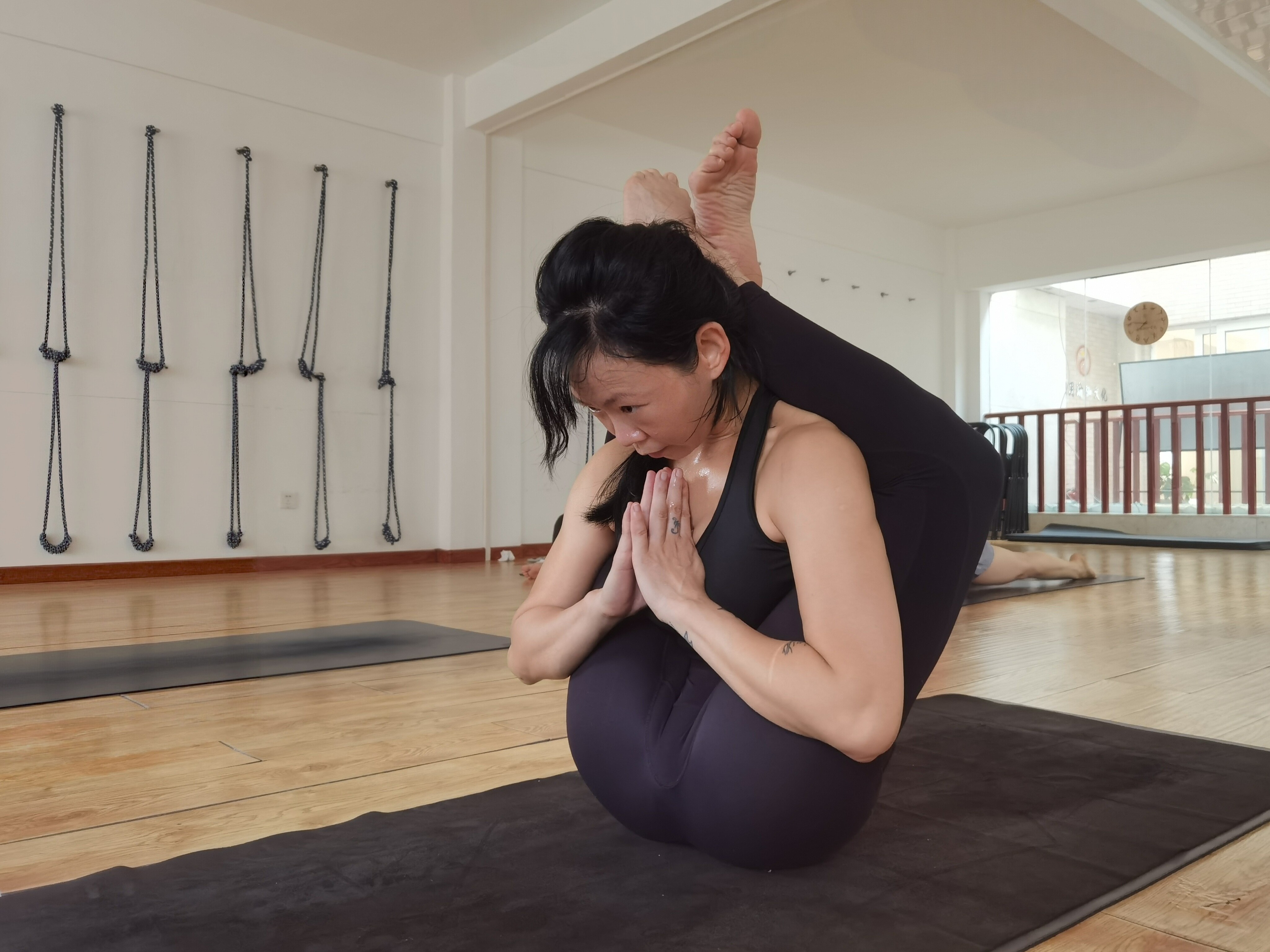
Kurmasana (Turtle Pose): A yoga posture for deep meditation
Sanskrit Etymology
Sanskrit: Kūrmāsana
byKūrma (Turtle) + Asana (आसन, posture/seat)Turtle pose, named for its literal resemblance to a turtle's sitting position.
1. Mythological Origin: Vishnu's Turtle Incarnation (Kurma Avatar)
The Tortoise: Kurma, the second avatar of Vishnu and guardian of the universe.
Myths
The world is flooded; the gods must churn the Ocean of Milk to retrieve Amṛta (immortality). Vishnu takes the form of a giant turtle, diving deep to support Mount Mandara as the churning rod. The serpent king coils around it as the rope, and together they churn out Amṛta and Lakshmi.
Symbolic Meaning
- Stable: Steadfast as a turtle, carrying the world
- host: Carrying the weight of the universe
- Guard: Protect the Gods and All Beings
- Rebirth: Symbolizing eternity with the longevity of a turtle
II. Core Philosophy: The Embodiment of Pratyahara
Shell metaphor
Limbs and head drawn inward like a turtle retracting into its shell, corresponding to the fifth limb of Ashtanga Yoga—PratyaharaWithdraw the senses from external stimuli, refrain from chasing sounds and sights, and focus inward.
The Bhagavad Gita 5.13
Retract like a turtle: withdraw the senses into the mind.
When the heart is no longer disturbed by suffering or joy, greed or fear, anger or rage, it returns to peace and clarity.
The Yoga Sutras 3.32
Meditate on the Kūrma-nāḍī (the energy channel in the throat) to stabilize the mind (Citta-sthiti).
3. Symbolism of Energy and Mindset
Patience and Resilience
Slow and steady like a turtle, symbolizing long-term practice and enduring stability (Sthira). Do not rush.
Inner Stillness (Sattva)
Deep forward bend with adduction to activate the Ajna chakra, cleanse the Manipura chakra, and balance the Svadhisthana chakra; calm the sympathetic nervous system, cultivate Sattva-guna, and move beyond restlessness and inertia.
Return to Your True Self (Ātman)
The "shell" symbolizes the physical body, while "withdrawing inward" represents consciousness detaching from external forms to return to the true self, realizing "I am Brahman (Aham Brahmasmi)."
IV. The Significance of Spiritual Practice
Turtle Pose is the critical bridge from external asanas to internal meditation ** **.
Practice: steady posture → even breath → calm mind → sense control → focus → meditation, gradually awakening inner awareness toward liberation (Moksha).
Conclusion
Kūrmāsana (Turtle Pose): Anchoring body and mind with the stability of a turtle, withdrawing the senses like a shell drawn inward. A path from external asana to internal meditation.
In every deep forward fold, find the stillness and stability of a giant turtle in meditation. Withdraw your senses from the noisy outer world and return to your true self and inner silence.
Hello. 🙏
Want to learn more about yoga philosophy and practice techniques?