Spider Pose (Jālikāsana): Deep Meaning and Spiritual Significance
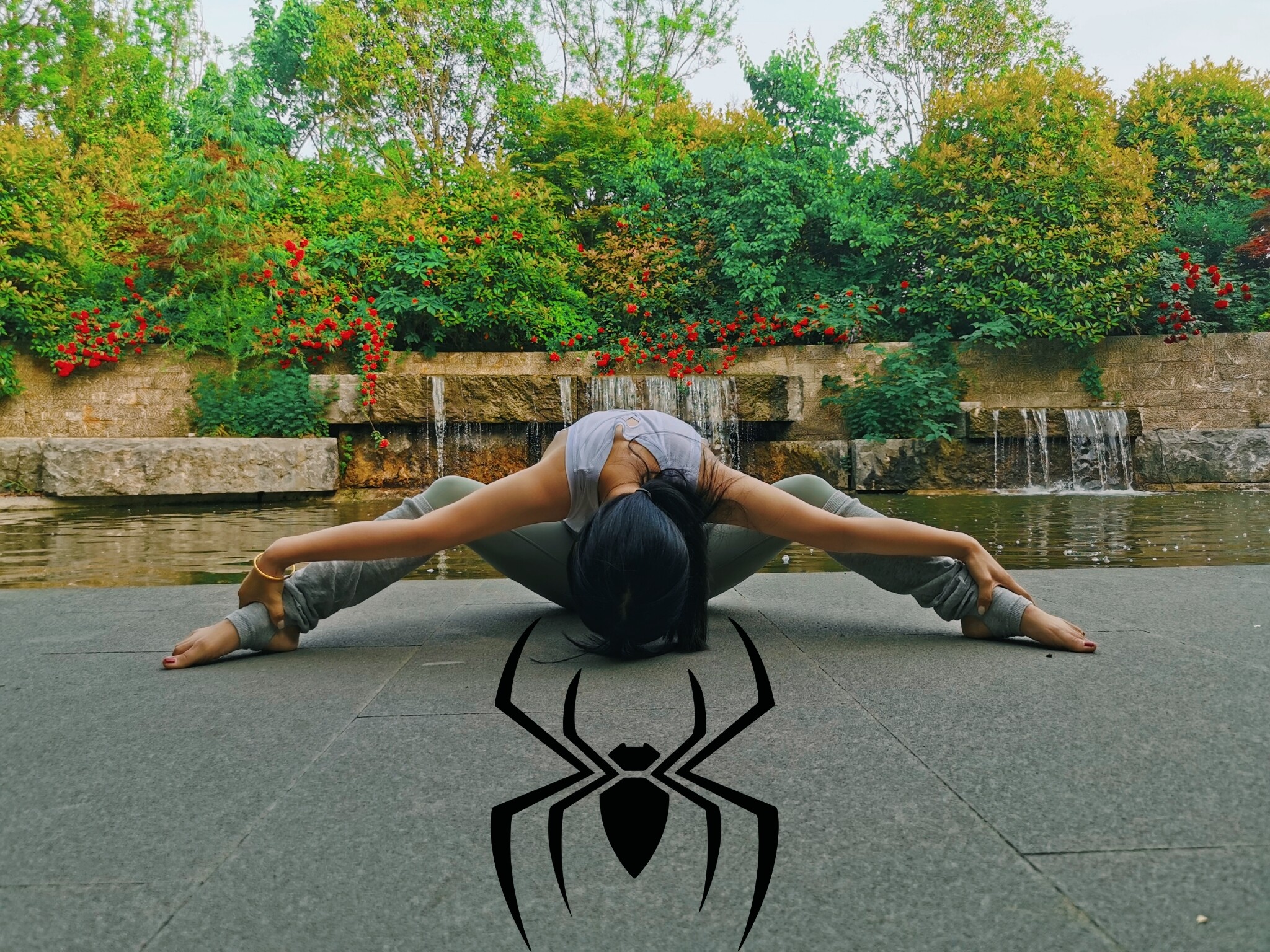
Yoga Spider Pose (Seated Wide-Angle Forward Fold Variation) – Jālikāsana | Upavistha Konasana: A spiritually grounded and powerful posture that stretches the body, calms the mind, and embodies the essence of life.
1. Physical Level: Release Tension, Achieve Inner and Outer Clarity
This pose deeply opens the hips and inner thighs, lengthens the spine, and releases tension in the shoulders and back.
1. Open up the pelvis and groin
Release tension from prolonged sitting, loosen stiffness, and boost circulation in the lower body to let energy flow freely.
2. Bend forward and lower your head
Gently massages internal organs, relieves lower back strain, and eases long-term tension and soreness to restore calm to body and mind.
3. Stretch arms and legs out to the sides
Stretch your entire fascial network like a spider weaving its web, awakening flexibility and foundational strength while feeling every cell come alive.
2. Yoga Philosophy: Surrender Within, Rooted in Stability
1. Forward Bend = Surrender and Humility
In yoga, bowing your head and lowering your body symbolizes letting go of attachments and turning inward.
Let go of the restless urge to chase outwardly. Turn your attention inward, accept your body as it is, release anxiety and resistance, and find inner peace through surrender.
2. Wide Hip Opener = Release Emotional Blockages
The hips are the body's reservoir of emotions. The Spider Pose deeply opens the hips, releasing suppressed grievances and tension, clearing energy blockages in the mind and body, and allowing pent-up emotions to be released and transformed.
3. Feet grounded = Stable core
Feet firmly planted on the ground, like a spider anchoring its web—symbolizing inner stability, unwavering focus amidst external chaos, and maintaining one's true self through change.
III. Spiritual Meaning: The Life Metaphor of the Spider
In yoga and Eastern spirituality, the spider carries a powerful metaphor for life:
1. Weave your own life story
Just as a spider spins its web, we weave our own lives, relationships, and destiny with our own hands.
Flexible yet resilient, dense yet powerful, gentle yet strong—this is the essence of life within us all.
2. Effortless control, perfectly balanced.
Like a spider's web, it can stretch wide to embrace everything or tighten to protect what matters.
Corresponds to life: embracing the world outwardly while finding inner peace, discovering life's balance between expansion and introspection.
3. Endure with resilience; wait for fulfillment.
The spider weaves its web in silence, waiting patiently—symbolizing quiet accumulation and steady progress without haste.
All growth and blossoming stem from daily, quiet dedication and deep rooting, nurturing the beauty of life over time.
4. Connect everything, close the loop
The interconnected web symbolizes the mutual dependence and interconnection of all things.
Connected with tenderness and inner harmony to ourselves, others, and the world—we are never isolated.
4. Ultimate Expression of the Soul and Life
The Spider Yoga pose fully embodies the power of women and life:
Gentle and expansive, yet powered by a strong core.
Soft yet tough—neither sharp nor fragile, resilient against life's storms.
Grow roots inward with clarity; expand outward with inclusivity.
Stand on your own, think for yourself—like a spider: weave your own web, build your own foundation, and complete your life with independence.
Bowing down is humility turned inward; stretching out is confidence turned outward. Between breaths, live a life that is free, relaxed, independent, and strong.
Conclusion
Spider Pose (Jālikāsana) is a profound dialogue from body to mind, where you meet your most authentic and complete self between expansion and surrender, between grounding and blooming.
May every practice fill you with spider-like flexibility and strength, weaving the unique patterns of your life into a beautiful existence of freedom, ease, independence, and fulfillment.
Hello. 🙏
Want to learn more about yoga philosophy and practice techniques?